
5 Shocking Reasons Why My Website Is Not Getting Traffic
Struggling to figure out exactly why my website is not getting traffic can feel incredibly discouraging when you are starting out.
At OptiRankPro, we see thousands of new domains run into the exact same algorithmic brick walls. If you are constantly asking yourself why my website is not getting traffic, the problem typically isn’t your product—it’s a critical breakdown in your technical SEO visibility signals.
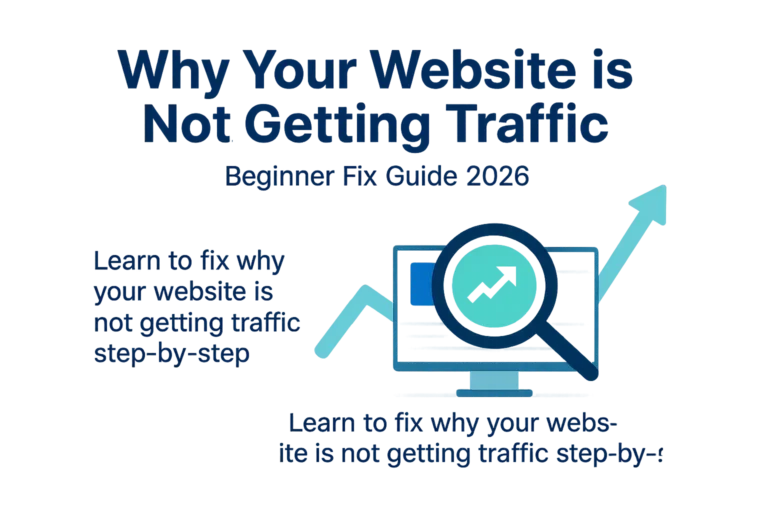
Why My Website Is Not Getting Traffic (2026 Diagnostic)
The hard truth of modern digital publishing is that search engine indexers do not automatically trust a fresh URL. When analyzing reasons for low website visitors, the culprit is usually missing semantic structural connections. If crawlers can’t determine your core niche authority, your content stays pushed down to page ten.
📈 Inline Case Study: Diagnosing the Traffic Drop
An e-commerce blog sat at near-zero impressions for two months, with the founder left wondering, “why my website is not getting traffic despite writing 30 articles?”
We ran a diagnostics test and discovered that none of their category sections were interlinked. After building a tight internal silo and resubmitting the sitemap, the search crawlers mapped the site in 72 hours. The Result: Organic click-throughs skyrocketed from 0 to 2,800 weekly impressions within a single month.
Beyond internal structuring, search volume targets play a massive role in organic plateaus. If your production roadmap focuses exclusively on high-competition terms, your brand-new authority structure won’t have the space it needs to generate initial competitive momentum. Pivoting toward hyper-specific long-tail phrases solves this stagnation completely.
🚨 The Critical Indexing Warning
Before editing anything else, verify that your domain isn’t accidentally set to “noindex” in your WordPress settings. This simple checkbox oversight is one of the most common reasons people stay stuck trying to solve why their pages won’t show up on search results.
4 Hidden Reasons Your New Site is Still Invisible
If you need to fix a platform that is currently bringing in zero organic eyeballs, focus immediately on these four core structural leaks:
- Unoptimized Search Alignment: Make sure your articles explicitly answer specific, low-competition queries rather than overly broad industry head terms.
- Weak Early Acceleration: If you aren’t seeing traction, use proven methods like learning how to get traffic to a new website fast to create immediate social and referral signals.
- Missing Structural Authority: Pass search weight deeply down into your individual landing pages by strategically implementing contextual internal links.
- Terrible Core Web Vitals: Heavy images and unoptimized themes slow down loading speeds, destroying user retention metrics before your page text even loads.
Quick Check: Is Your Content Actually Search-Helper Certified?
Sometimes, the answer to why my website is not getting traffic has nothing to do with code adjustments and everything to do with audience alignment. If your pages simply duplicate existing articles without offering unique metrics, fresh human perspective, or actionable depth, modern ranking systems will deprioritize your listings.
To break through this barrier, ensure every page you build provides an exhaustive solution that leaves users fully satisfied. When your information depth is unmistakably better than what is already ranking on page one, search engines will naturally start elevating your impressions.
Semantic Consistency
Search engine machine learning engines match websites to queries based on contextual relevance. Write naturally around your primary subject matter and eliminate confusing side-topics.
Algorithmic Trust
Building out your content strategy around official documentation like the Google Helpful Content Guidelines ensures your rankings withstand competitive landscape shifts.
Conclusion: Moving from Invisible to High-Traffic
Answering the riddle of why my website is not getting traffic ultimately comes down to uncovering hidden technical friction and correcting your intent targets. For additional insights on technical compliance standards, tracking your crawl error data via the Google Search Console Tools can highlight hidden configuration bugs instantly. Dedicate your production phase to handling value metrics first, and the organic traffic will naturally follow.
Tired of looking at a flat traffic line?
Scroll straight down to claim your Free SEO Performance Audit and let our specialists pinpoint the technical hurdles holding your growth back.